October 03, 2026
Kryptos K4: The Answer Was Found — But Nobody Cracked the Code
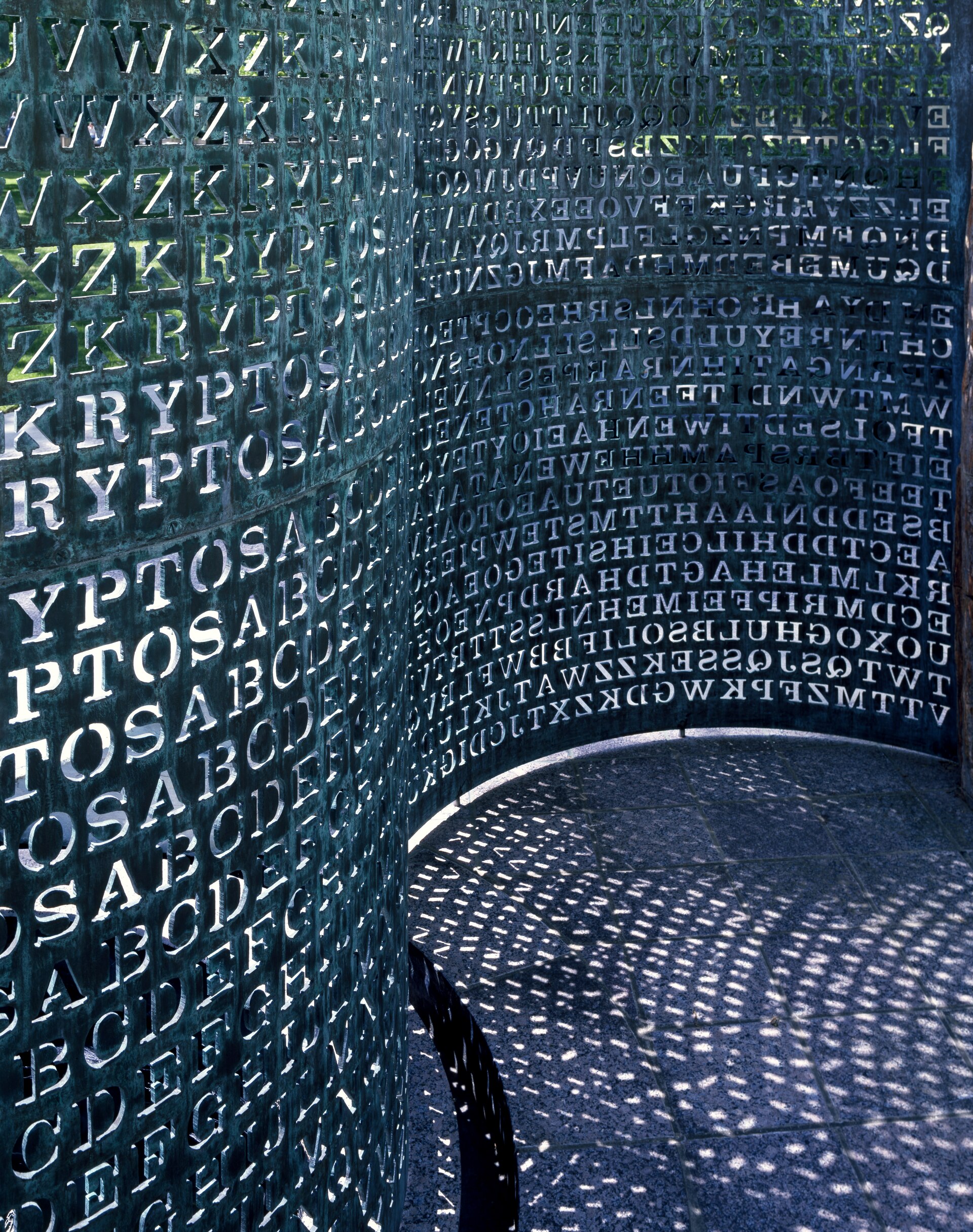
Carol M. Highsmith / Library of Congress (public domain)
There's a code the CIA can't read — and last year, someone paid $962,500 to keep it that way.
Kryptos, the curved copper sculpture in the CIA's courtyard in Langley, Virginia, has carried four encrypted messages since 1990. Artist Jim Sanborn built it with retired CIA cryptographer Ed Scheidt; about 1,800 characters are cut clean through the copper. Three of the four passages — K1, K2, K3 — fell in the 1990s. The fourth, 97 characters called K4, beat the NSA, the CIA, and thousands of amateurs for 35 years. Sanborn released clues over the years — BERLIN, then CLOCK, then EAST NORTHEAST — and K4 still held.
Here's the twist. In August 2025, Sanborn, approaching 80 and worn down by decades of being hounded for the answer, announced he'd auction the solution and hand the keeper's role to someone else. The estimate: $300,000–$500,000.
But before the sale closed, two journalists got there first — without cracking a single cipher. Jarett Kobek noticed the auction catalog mentioned Sanborn's "coding charts" sitting in the Smithsonian's Archives of American Art. Richard Byrne went to look. Among the papers were taped-together scraps containing K4's plaintext. On September 3, 2025, they emailed Sanborn the full decoded text.
Sanborn confirmed it was real. He'd mistakenly filed those scraps years earlier while compiling his papers during cancer treatment. He asked the Smithsonian to seal the files for 50 years — and it complied.
The sale went ahead anyway. On November 20, 2025, RR Auction sold the archive for $962,500 to an anonymous bidder, now designated the new "Kryptos keeper." A portion of the proceeds went to disability programs.
And here's the part that keeps us up at night: the journalists found an archived answer, not a cryptanalysis breakthrough. Nobody outside that vault has explained the actual encryption method. Days before the auction, Sanborn himself said the puzzle "has not been solved" — and released new clues anyway.
So the plaintext exists. The method is still a mystery. And the world's most famous code is now a very expensive secret.
Our ground rules hold: we're asking the question, not claiming the answer. If someone tells you they "solved" K4, ask them to show the method — because finding the answer in an archive isn't the same as breaking the cipher.
Question: if you were handed the answer to a 35-year mystery, would you keep it secret — or share it with the world?
Source: Scientific American, artnet News — read the original report
← Back to latest stories